
It’s hard to imagine that the Broads would have once been a forest. By the 12th century East Anglia was one of the most settled-in areas of the UK and its once verdant forests had been cleared.
Peat digging in the Broads began in the 12th century, when medieval communities excavated the landscape for fuel. As sea levels gradually rose and the land subsided, many of these diggings flooded and were abandoned by the 14th century, eventually forming the network of broads and waterways we see today.
The Broads was once a low-lying landscape of peat fens, busy with labourers whose task was to dig for fuel. As the excavations grew into great pits and rising waters gradually inundated the land, these peat diggings were abandoned. Over time, memory of the forests and wetlands that once covered Norfolk and Suffolk faded, leaving behind the waterways we see today.
Ever so slowly, nature swept channels between the great pits, until one day there were pools of water connected by rivers and for all anybody knew they had been there since time immemorial. There was nobody to say otherwise and besides, a new sort of forest had begun to grow…
Nature has always been quick to reclaim what is taken from her and the Broads were to be no exception. As soon as those peat diggings had begun to fill with water, life had begun to grow. Out of the sediment sprouted water plants, and the banks drew all manner of life to its refuges. Water voles began to burrow, bitterns discovered the newly shot reeds. When the rivers found their way to the sea new creatures began to arrive, the European Eel travelled all the way from the Sargasso Sea to live in the fresh water shallows. Milk parsley burgeoned with swallowtail butterflies, Norfolk hawker dragonflies stalked the water’s surface. The great pike swept through the ripple-less water like a torpedo.
Man did his best to tame the wild landscape which he had inadvertently created, but despite the construction of dykes and windpumps, flooding continued to prevail creating reedbeds, grazing marshes and carr woodland. But now that the Broads existed, the waterways which the people had created offered a new host of opportunities. It was in the 1600s that people began to extend the rivers, a practise which continued until 1826 with the completion of the Dilham Canal. And so for hundreds of years people created vessels upon which to traverse the rivers which could take them through the counties of Norfolk and Suffolk, to great cities like Norwich or tiny villages like Bungay. They could reach the sea and thereby the rest of the world if they desired it. And so the Broads became a navigational channel, home to nature and humankind both.
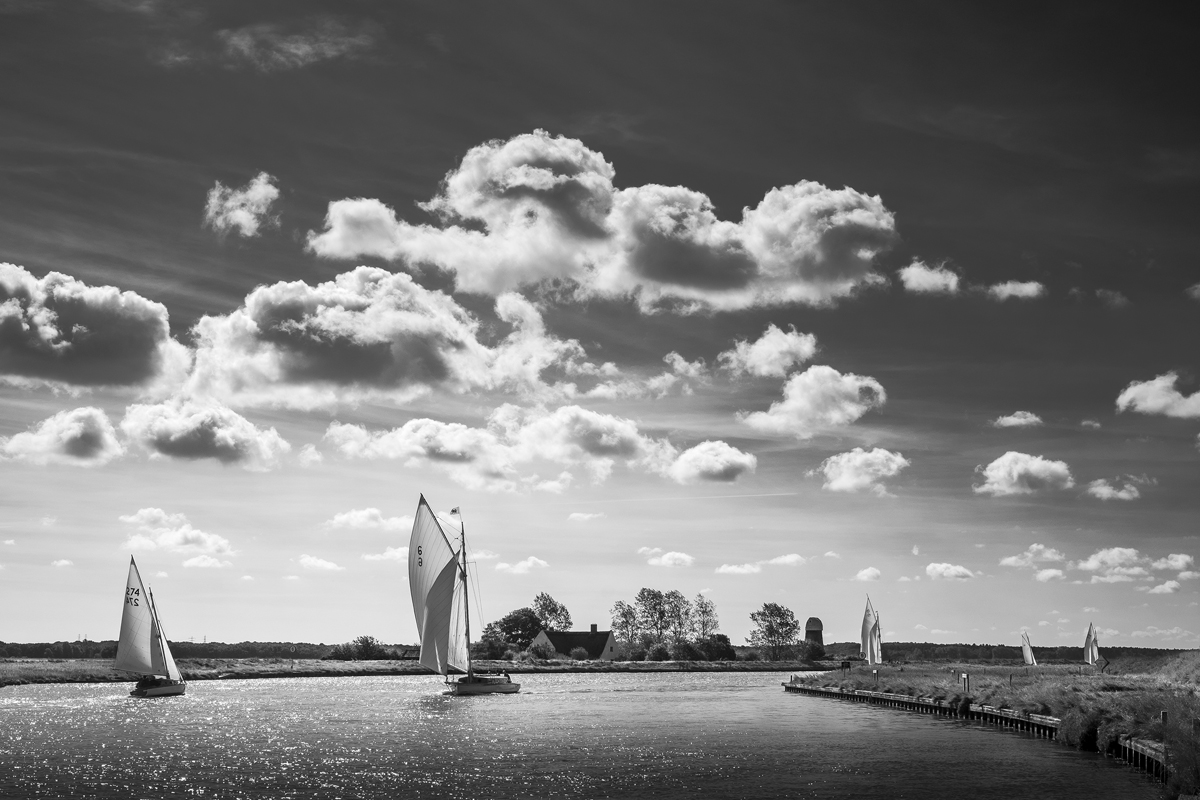
Time has swept by quickly for the Broads, and today you’re most likely to see motor cruisers which resemble bathtub-toy boats being driven by jolly holiday makers. But even now the majesty of the traditional black-sailed trading wherry can be seen sweeping through the reeds, and the fleets of highly polished sailing boats can be found racing each other, their white sails reminiscent of the wings of the butterflies who flock to the river plants. In among it all are the water lilies and the wading birds and the invertebrates and fish who thrive upon the accidental habitat which has made the Broads home to a significant proportion of the UK’s rarest wildlife.