
As the seasons shift, the landscape transforms with crisp mornings, ripening berries, and leaves turning rich shades of gold. It’s an inspiring time to head outdoors with your camera ready, and the Broads National Park offers an abundance of picture-perfect moments. From reflective waterways to wildlife-rich marshes, here are some of the most striking seasonal scenes to capture throughout this colourful time of year.
The Horsey seals
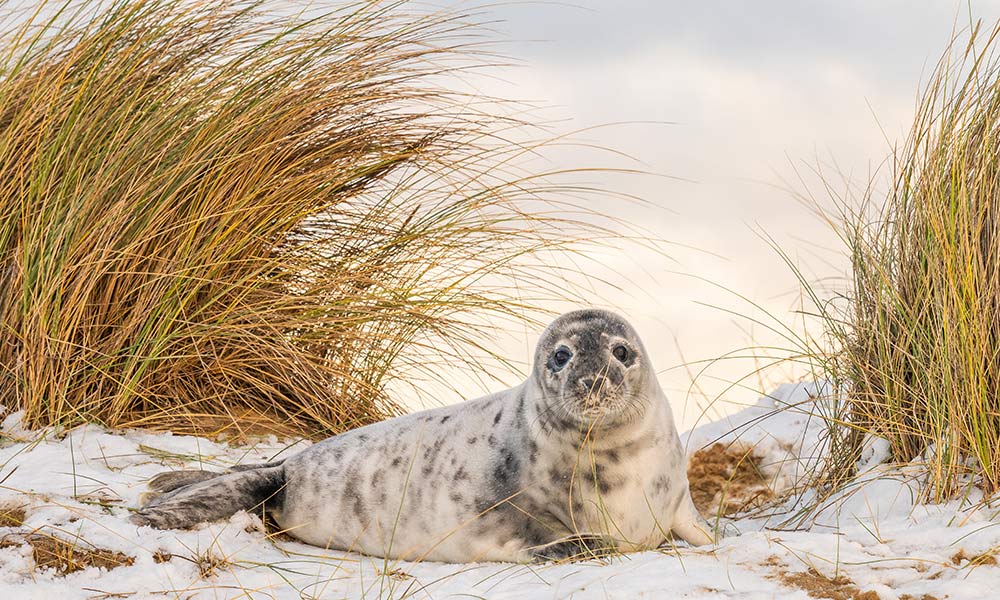
There are few scenes more evocative than a windswept beach in autumn, but even more so when it is awash with seals. And that is why Horsey Beach is one of the sites that must be visited by all keen photographers. There are plenty of these gentle giants to be found wallowing by the water’s edge. The combination at Horsey Beach of restless waves, rare sea plants, rolling dunes and washed up driftwood provides all the inspiration you need for the perfect shot with or without a whiskery muse.
Top tip: Make sure you take a zoom (telephoto) lens if you have one so that you don’t get too close to the seals and disturb them – Friends of Horsey Seals offer some great guidance for seal watching. Don’t worry if you don’t have a telephoto lens – the priority is to keep a safe distance from the seals and avoid disturbing them; if needed, crop your images afterwards rather than moving closer. Please keep your distance from the seals. Government guidance is to stay at least 100 metres (330 feet) away from seals & other wildlife.
Flowers in the frost
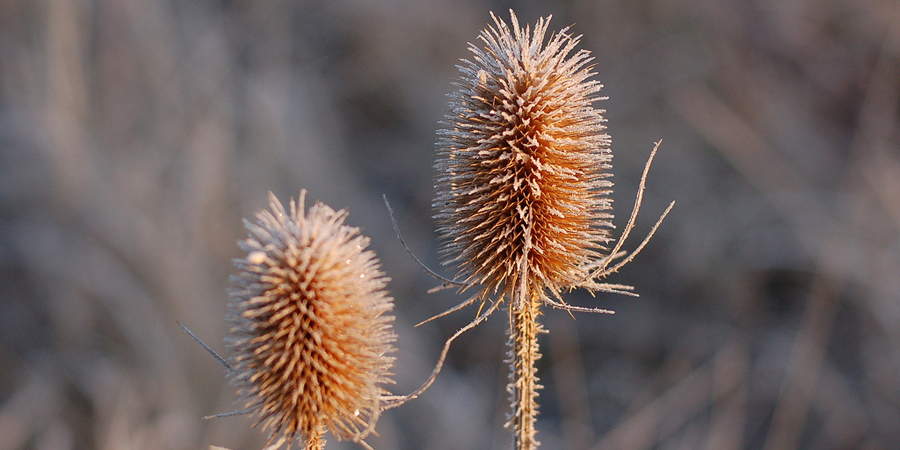
Ok, so there might not be many flowers! But with autumn comes early morning frost and there are few things better for evoking the magic of this golden season than the perfect shot of bejewelled berries and branches. Alternatively morning dew is equally effective, but there are few things more seasonal than those ice-kissed snapshots. For extra brownie points, photograph something seasonal such as teasel heads, toadstools or horse chestnuts.
Top tip: Try and shoot with a wide an aperture as possible (smaller number) to get some strong background blurring and allow your frosty subject to stand out against the backdrop.
The Common Crane
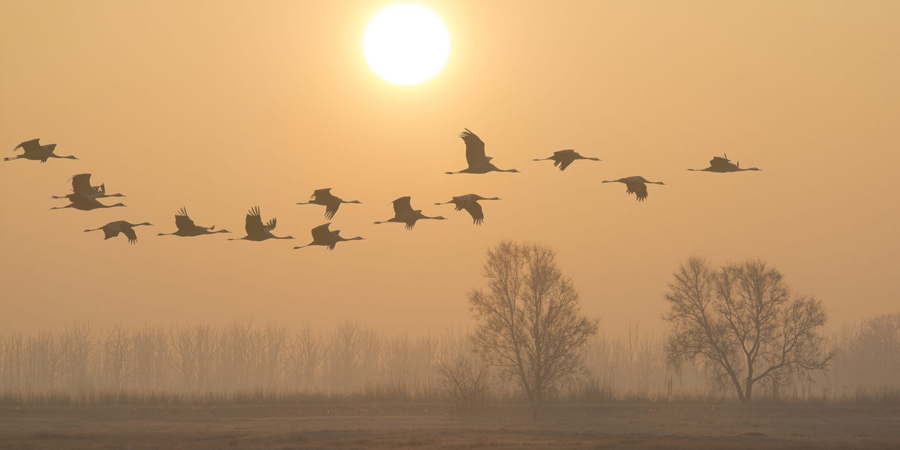
The common crane doesn’t look like a bird that you should see in Britain, and yet some of these migratory fowl have taken to living in the Broads all year round. If you station yourself at Hickling Broad on an autumn or winter evening, you might capture these majestic birds coming in to roost. What better to offset a sunset than an exotic crane sweeping gloriously across it? For photographic juxtaposition this autumn, the common crane provides a striking shot.
Top tip: Head to the Stubb Mill viewpoint at NWT Hickling Broad in late Autumn for the best chance to get a glimpse of this fascinating bird.
Big Skies
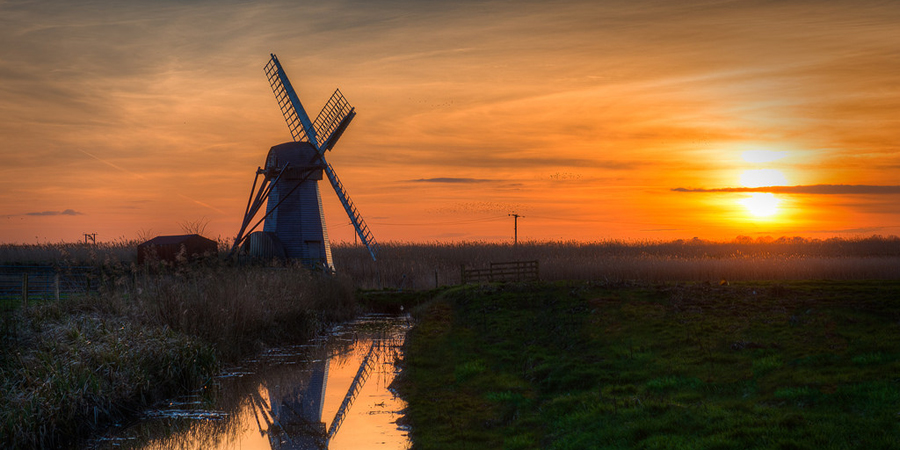
We know that the Broads National Park is world famous for its ‘big skies’, so why not capture their fleeting autumnal moods? While clouds are symbols of cold and rain to some, for the keen photographer they are an expression of nature’s many faces. The range of weathers traditionally experienced in autumn makes this the perfect time to experiment with capturing the different conditions of one of the Broads’ most revered features.
Top tip: Head out during the ‘golden hours’ of the day when the sun is either rising or setting as this produces some wonderful colours and soft lighting. Luckily, as the nights start to draw in, this needn’t be too early or too late for you to get out at a convenient time and still get that dramatic shot.
The Pink-Footed Goose
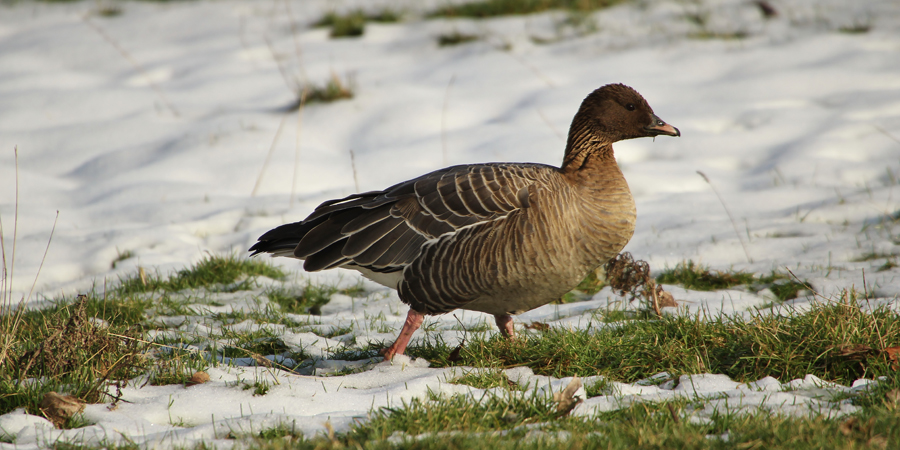
The Broads provides one of the perfect environments to spot the pink-footed geese which arrive from Iceland and Greenland. Each Autumn (often in October) these acorn-coloured birds with their pink feet and lacy feathers descend upon Norfolk in their thousands. They are an emblem of the colder months and an icon of autumn in the Broads.
Top tip: The River Thurne is a key spot of choice for these migrants, with Horsey and Martham particular hot spots. Come equipped with your camera and plenty of autumnal enthusiasm.
Too often summer is seen as the season to be outdoors and among nature, but there is really no time better to discover the beautiful Broads than in the autumn. Whether you’re a professional or an amateur, use our ideas as inspiration to get yourself outdoors, into your wellies, and enjoying the breath-taking landscape.
Please remember that all wildlife photographers are in a position of responsibility and should adhere to the Royal Photographic Society code of practice