
There is usually a level of confusion with this small and charismatic mammal sometimes found among the ditches, dykes and riverbanks of the broads. In this blog we hear from Hannah, one of the Broads Authority Ecologists, to learn more about this elusive but wonderful species.
They are difficult to spot, shy away from visitors and even when they are seen they are often mistaken for rats – a situation not helped by fact that ‘Ratty’ from Wind in the Willows is in fact one of these creatures and not a rat at all!
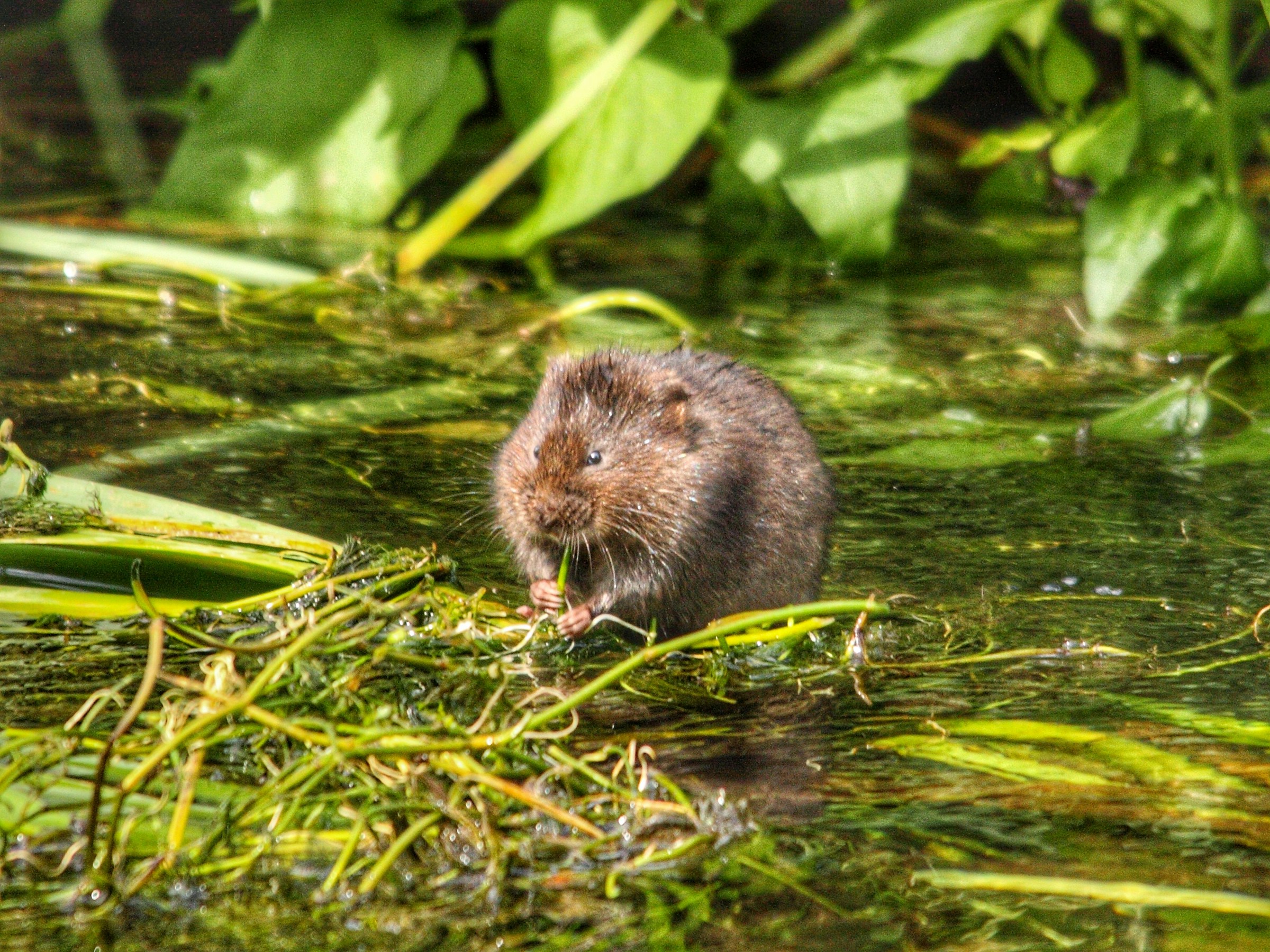
The easiest way to identify a water vole (Arvicola amphibius) is to look for their faces, which are round with a round nose and short ears, plus their hair which covers their tail and paws. Rats, in contrast, have a pointed nose without hair on their tail and paws.
Voles have a relatively short life expectancy, usually living between a year and two years in the wild or up to 2 ½ years in captivity. Their breeding window is March/April to October and they can have 4 – 6 young in a litter, with the young reaching sexual maturity after just 12 weeks, resulting in around three litters per year.
A vole’s life
Thankfully, voles are often on the same working schedule as the Broads Authority Ecologists, meaning we can get some fantastic sightings of them during the daylight hours.
Whilst out on-site, our Ecologists and Volunteers often spot voles munching away at vegetation or, once disturbed, frantically swimming up the winding waterways of the Broads. During the summer months they are busy gathering food, taking it back to their burrows to amass a stockpile for the cold winter months.
Adults typically weigh between 100 – 380g. They have brown fur covering their whole body with their underside slightly paler than their top. Their colouring means that they blend well into the reeds and fen vegetation seen in the Broads – you are far more likely to hear a ‘plop’ sound when walking past a ditch than actually seeing them.
Their diets consist mainly of the plants which grow in watery habitats such as reeds, sedges and grasses as well as roots, bulbs and even fallen fruits such as windfall apples. Eating is an important aspect of their daily routine, the amount of food which they need to eat per day is around 80% of their body weight!
Where do we encounter them?
Voles usually live inside burrows in banks off rivers, dykes and ditches, extending 5m back from the water course. If possible, there will be an ‘above the water line’ entrance and an underwater one, offering options for voles to enter and exit their burrow unnoticed. There is also increasing evidence that water voles will create large grass nests, the size of a football, in reedbeds and in areas where there is no suitable bank for burrowing.
When work takes place in the Broads it’s important to minimise the impact it has on the wildlife that lives here. Our Survey Volunteers help throughout the year to conduct surveys looking for voles in locations where planned works are set to take place and also to check after works have been completed.
Water vole surveys can be conducted either via the fingertip method or using rafts (see raft picture (insert Raft picture 2)). In one location where a survey has been taking place for a few years now the signs are looking good. Volunteers have been seeing more frequent signs of voles, particularly during the summer months.
What are the signs?
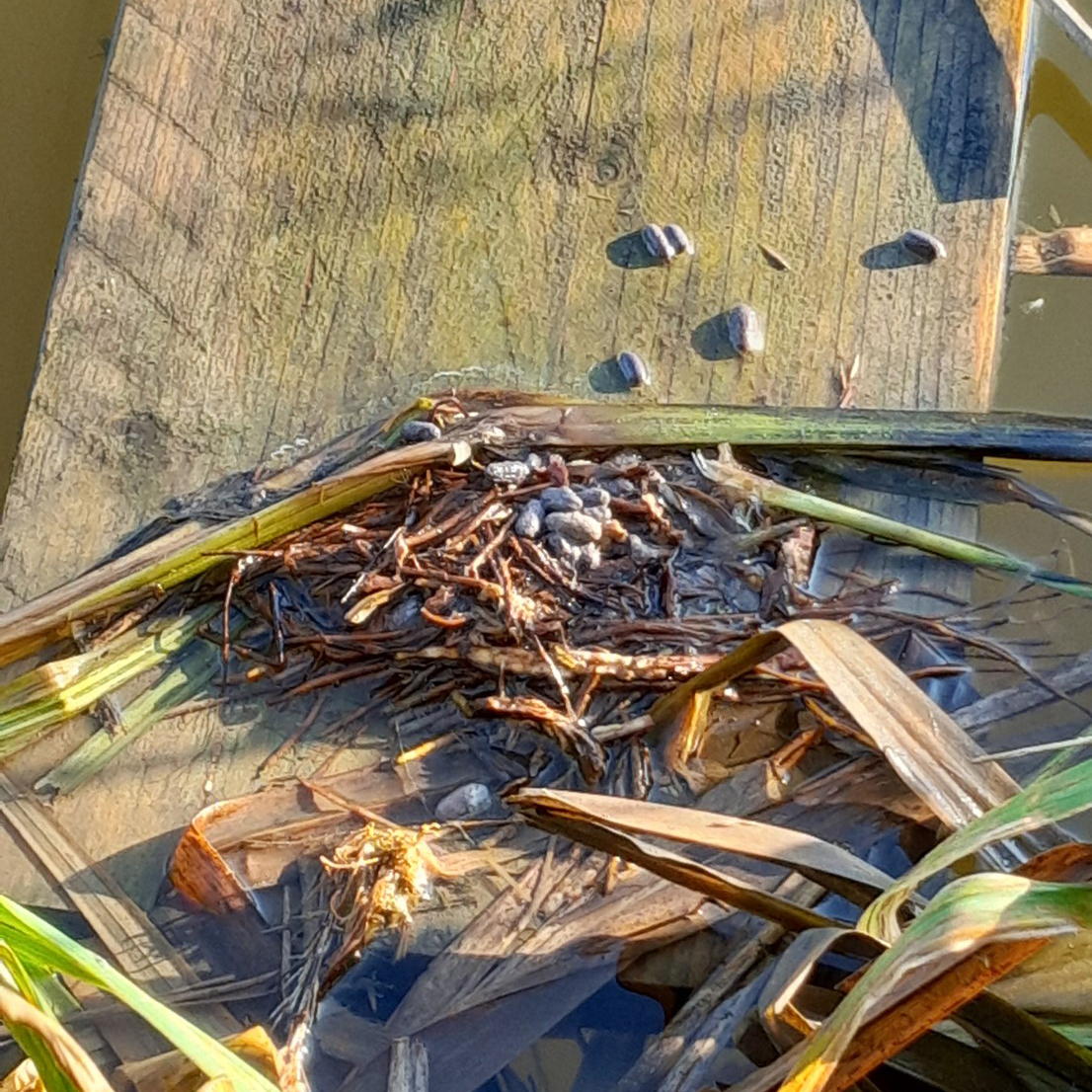
Water voles will often leave piles of feeding remains which contain remnants of the vegetation that they have been consuming. The vegetation is often left at a 45° angle and, combined with their droppings, is a telltale sign that they are in the area.
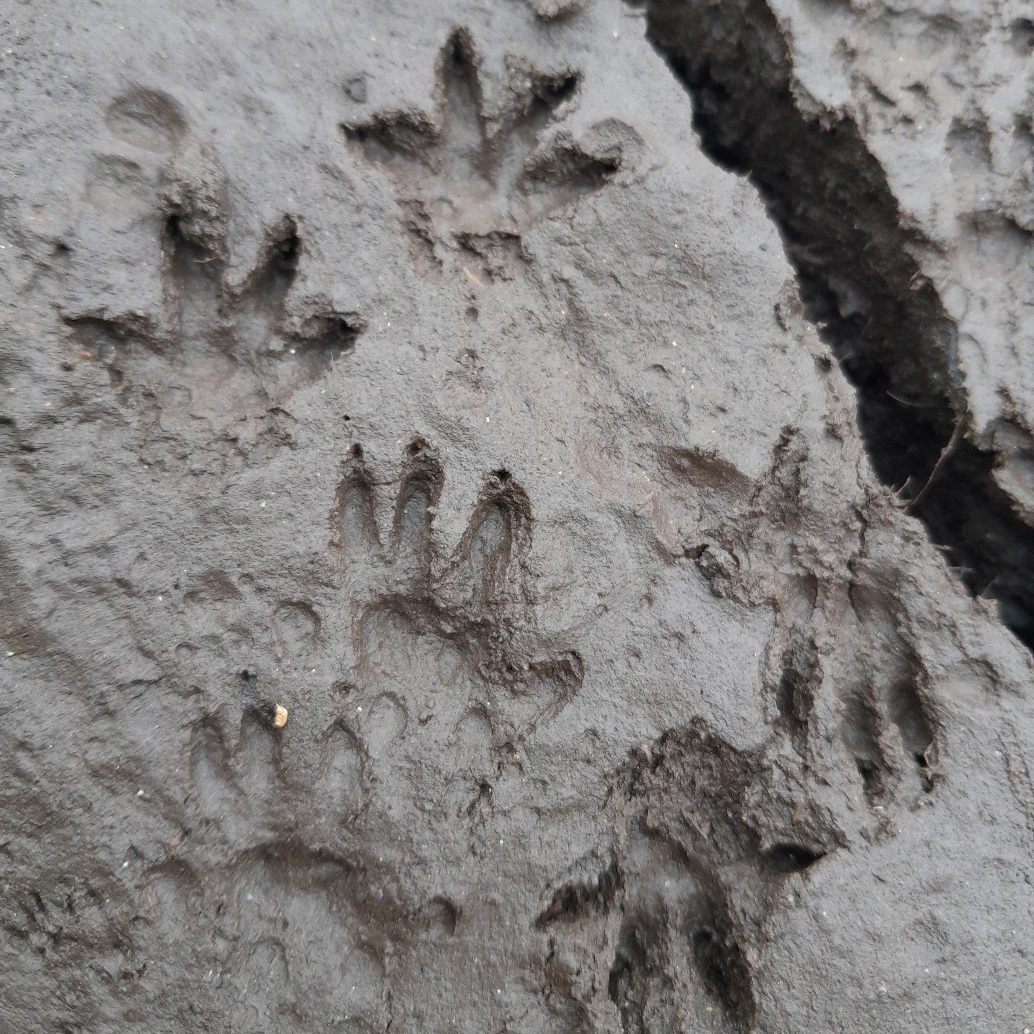
Other clues such as paw prints in mud can be seen occasionally in areas with high tide variation, or in the summer when watercourses are drying out a little and bare ground is exposed near the bank edge. (insert paw prints picture).
Their droppings are the size and shape of a tic tac, ranging in colour depending on what vegetation is being consumed. Droppings are odourless and will dry out to reveal the plant matter which has been digested by the vole. Runs, pathways or tunnels that water voles create through vegetation, typically near the water’s edge, along with burrows are also good indications for their presence. (insert raft picture 1)
Threats
Many predators will try taking a water vole including herons, marsh harriers, and otters, but one of the biggest threats (until recently) has been the non-native American mink.
American mink were originally bred for fur in the 1920s. However, with a favourable wetland habitat on their doorstep, populations of escaped mink bred intensively in the Broads. Locally, they damaged populations of birds and mammals and nationally caused a 90% decline in water vole populations. This resulted in the local extinction of water voles in many areas.
The mink trapping programme started in the Broads in 2003, managed by the then Norfolk Mink Project (now Waterlife Recovery East). It initially focused efforts around the River Wensum and then expanded to the rest of the Broads along with Norfolk and Suffolk.
There are currently around 340 ‘smart traps’ and floating raft traps set in Norfolk alone. When the door shuts in a smart trap it doesn’t harm any animals caught, but instead triggers a text message which is sent to a volunteer. They then visit the site, inspect the trap and release anything other than mink back into the wild. After a recent increase in water vole numbers, many mink traps are now fitted with a special excluder, stopping water voles and birds getting in. Caught mink are safely and humanely dispatched by a trained professional or volunteer.
The Waterlife Recovery Trust continues to trap mink and now the project has expanded from East Anglia all the way from the River Thames to Lincolnshire. This will reduce the likelihood of mink emigrating to different areas, thus expanding the area in which our native species, such as water voles, are protected.
It can certainly be said that overall, the recovery of water vole populations across the Broads is a great example of a conservation success story. You are increasingly likely to find signs of them in areas with suitable vegetation and habitat. Good luck finding them on your next visit.
Article by Hannah Southon – Broads Authority Ecologist