
Download the route for the How Hill to St Benet’s Abbey Walk.
Note: You can continue along the river to Sharp Street, from where a network of lanes and footpaths leads back to How Hill and Ludham – for details see Ordnance Survey maps.
What’s it like?
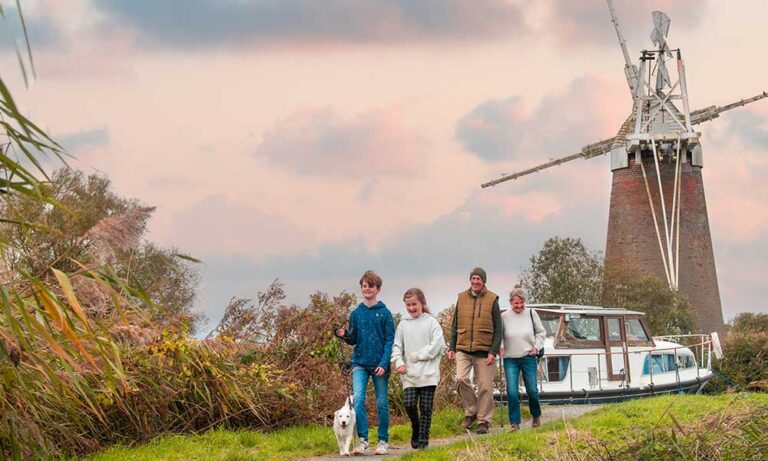
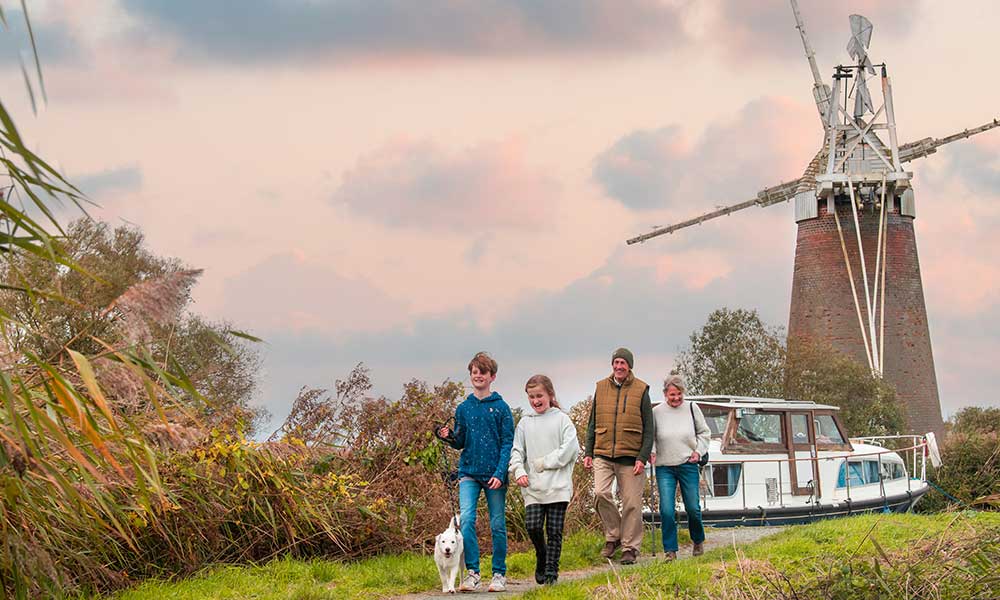
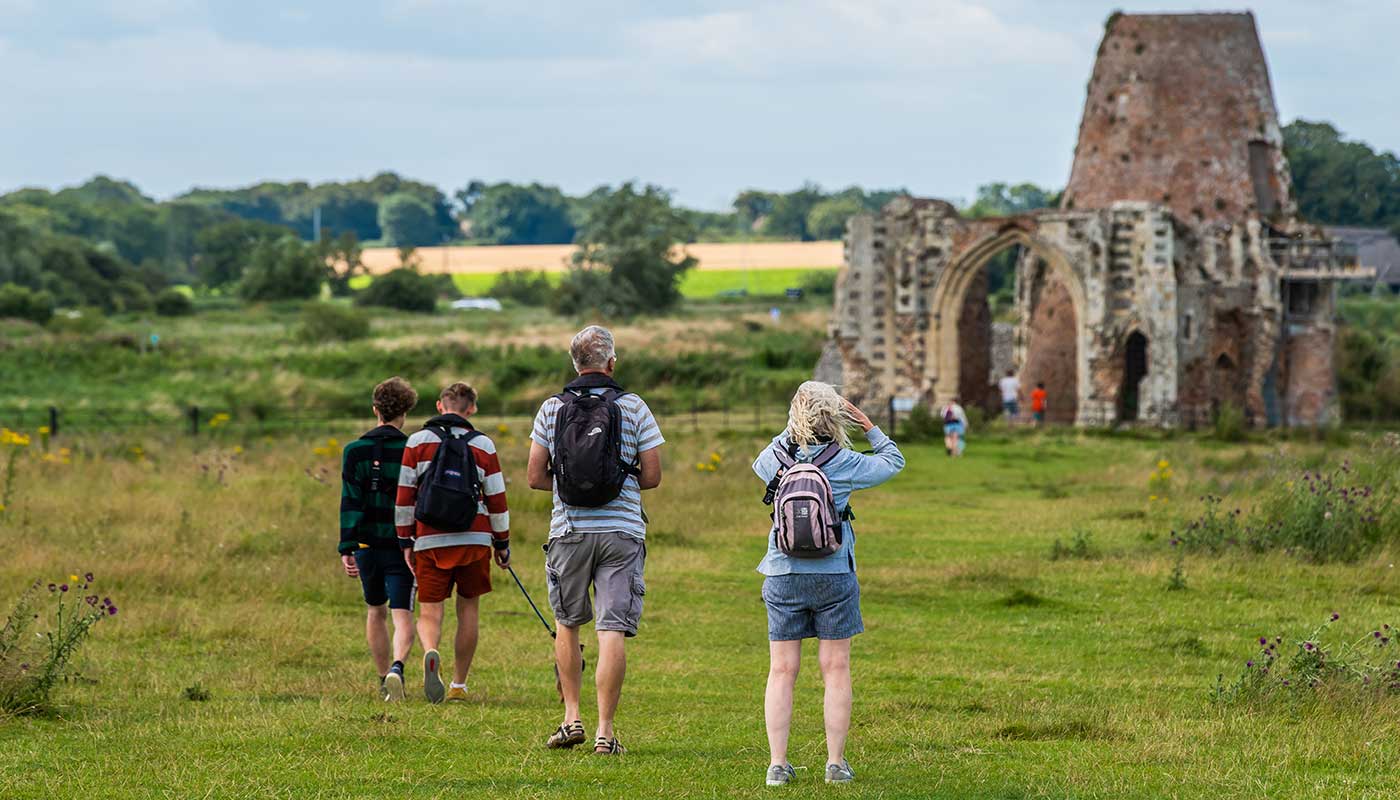
Visit How Hill National Nature Reserve and enjoy a riverside walk to St Benet’s Abbey, the remains of the only monastic site in England that was not officially closed down by King Henry VIII. How Hill offers Toad Hole Cottage Museum, wildlife boat trips on the Electric Eel and a wildlife walking trail. There are also three drainage mills on the site.
What wildlife lives there?
How Hill has something of everything that makes the Broads special. In June and August look out for huge swallowtail butterflies. You’ll also see Buttle Marsh, a new marsh where land is being encouraged to revert to a wetland to attract bitterns and other water-loving birds. Buttle is an old local name for a bittern. There’s lots more wildlife to see too – dragonflies, other butterflies, wintering birds and wildfowl.
What else is there to see?
You can explore the village of Ludham, including St Catherine’s Church, which is mainly 15th century. The font shows an unusual green woman. Womack Water is a good place to see traditional Broads boats out and about. Wherries Albion and Maud are based here as well as the Norfolk Heritage Fleet of traditional mahogany 1930s Broads yachts.
Did you know?
Ludham Hall was once a palace for the Bishop of Norwich. To this day the bishop is also Abbot of St Benet’s.
Find out more about St Benet’s Abbey.